Get Paid To Promote, Get Paid To Popup, Get Paid Display Banner
Showing posts with label biracial. Show all posts

Sunday, June 24, 2012

The Multiracial Advocacy Blog: What's in a NAME?


The Multiracial Advocacy Blog: What’s in a Name?

Today was Gay Pride Day in California, well at least in San Francisco where a Gay Pride Parade was held, as it is every year. I was listening to the radio after I read my Sunday San Francisco Chronicle and I was surprised at the two different take-away points each had from the same event.

The Chronicle gave me information. I learned that over 15,000 gay people were targeted during the Holocaust and made to wear pink triangles on their shirts. I had no idea. Many of them met the same fate as Jewish people during that terrible time. I learned that former San Francisco Mayor Willie Brown has worked for gay rights. The Chronicle coverage was unbiased, informational, educational, and positive.

The KGO radio show host tried to be unbiased by repeatedly referring to gay pride like black pride and, of course, multiracial pride. I’m not sure that’s helpful to anyone and my feelings were echoed by several callers.  

I’m tired of people comparing the gay movement with the multiracial movement. The reason they are so often compared because both seek legitimacy and equality. They are two definitely different movements. But why are they so often compared?

I remember when I was at my son’s elementary school in the early 1990’s and was standing in the hallway waiting for school to get out for the day. His class happened to walk by and we waved at each other. A woman standing next to me said, “Is that your child?!” I said, “Yes,” and her reply was, “It must be so hard to be the mother of a son who likes other boys.” Huh?! Ohhhhhhhhh, I finally got it. She had confused “biracial” and “bisexual.” Oh boy.

But I keep hearing it and it makes me downright mad every time. I’m hardly homophobic, but I’m also not seeing the connection. Is it that both groups have been opposed? Are biracial and bisexual closer in language than in reality? Am I supposed to ask biracial kids if they are also bisexual? Of course not, and yet the comparison continues.

I am Jewish. The connection between being Jewish and the history of the Holocaust is obvious—in your face—obvious. But I had never heard the gay/Holocaust history before. I doubt many people have. They are intrinsically different, but still let’s never forget either one.

I also hear multicultural interchanged with multiracial. Nope. Culture and race are different things: multicultural is more about “how we do things around here” while multiracial is “the DNA I was born with.”

It’s all very different and should not be all that confusing if only we could all just get along.

Susan Graham

Saturday, June 16, 2012

Interracial families and Korean Language

40% of multiracial children have difficulty with Korean
By Kim Bo-eun

If your mother isn’t Korean then the Korean language may not be your mother tongue. Forty percent of children from biracial families are having trouble speaking Korean as most of their mothers have the same problem, a study showed Wednesday.

The study by the Korea Institute of Child Care and Education was based on a survey of 534 multiracial families with children aged two to seven from June to September last year. It found that 40 percent of the children had Korean language difficulties.

The number of biracial children reached 151,154 last year, comprising 11.9 percent of the total number of foreign residents.

More and more Korean men have married foreign brides, especially from China and Southeast Asian countries.

Children who scored highest on the test had Chinese-Korean mothers; while those who had mothers from China, Vietnam, the Philippines and Japan showed similar levels of language development.

“The greatest factor behind the children’s delayed language development is that the mothers are not able to speak Korean very well,” said Choi Yoon-kyung, a researcher at the institute.

“However, despite their mothers’ inability to speak the language, children in families in which their fathers or grandparents participate in childcare do not have difficulty in speaking Korean.”

Another problem with interracial marriages is that they occur in rural parts of the nation, in which there is a lack of young women to marry men who work on farms.

“The problem is that rural areas do not have adequate educational centers the children can attend to acquire the language,” said Choi. “And fathers are usually busy working on farms so they are unable to take part in childrearing.”

The study also showed that children who attend childcare support centers or are using public services scored higher on the test, suggesting that a Korean speaking environment and interaction with other Koreans help in learning the language.

A positive development is that the government has started to take up the full cost of attending daycare centers since last year for children from multiracial families.

However, the authorities need to take additional measures.

“The government needs to identify the families in which the children experience difficulty in acquiring Korean, usually the ones with low incomes, to provide adequate support for them,” said Choi.

“Attention also needs to be paid to the parents, ensuring that both the fathers and their foreign spouses are ready and willing to participate in raising their children,” she added. 

Source:

Monday, June 11, 2012

The Multiracial Advocacy-Guest Blog by Cherrye Vasquez, Ph.D


Comfortable in Your Skin Whether You Are Biracial or Monoracial

By
I was once engaged in, what I thought at first, was a friendly conversation with a group of ladies at my place of employment. As mothers, we often talked back and forth about daily activities that our children were involved in. We did this often to amuse ourselves, and generally ended with much laughter among the group until one person said something that I hadn’t expected.

When I ended my story for the day on the subject of my daughter’s latest activity, one of the ladies turned to me and said, “Well, she’s going to have psychological problems anyway.” I looked at her and asked, “What?!” She went on to say, “She’s biracial, and all biracial children end up with psychological problems.”

This woman was the first person who’d ever made a statement like this to ME. While I’ve heard about and read stories of biracial children and adults alleging that they’ve encountered problems because they are biracial, I truly hadn’t spent any time at all pondering over this subject where my child is concerned.
What this woman claimed never crossed my mind before. Why? My daughter is a charming, well-rounded, culturally balanced, beautiful biracial girl who feels very comfortable in her skin. She affirms who she is and loves her self. In fact, if someone ever refers to my daughter as one ethnicity over the other (and this does happen on occasion), she will quickly inform them that she is no more one than the other, but both. She loves all of who she is, and is very proud of both her heritages.

Positive self-identity is an important virtue and character to behold. Our children must love who they are, and they must feel comfortable telling people who they are. Regardless of a child’s race, they are the ones who should tell a person who they are. They do not have to assimilate into someone else’s culture, or accept someone else’s label for them.

As a parent, the topic of my daughter having psychological problems didn’t and still does not faze me because I have ensured that I’ve done my part in balancing out my child’s life to include knowledge of both heritages, and pointedly building her character and self-esteem. I strongly believe that issues, good or bad, have to do with parenting and environmental situations in totality. If my daughter encounters problems, they will be no different from the problems of any child regardless of their racial make-up.

Because there may be those that declare that just because a child is biracial they will automatically have psychological problems, I needed to set my writing and platform topics in motion. This stereotypical myth has no merit and should be denounced.

I have made efforts to help children build character, self-worth, and empowerment. In addition, I believe that we must teach our children positive self-talk so that they can and will affirm who they are and what they want to become. We must also use self-fulfilling prophecy techniques with our children. If we do this, we will see them blossom and evolve into whatever their hearts desire.
Whether monoculture, biracial, or multiracial all children are very unique and important, and they should armor these feelings at all times. Each child possesses rich qualities to regard.

Source: Printed with permission from Cherrye Vasquez, PhD.

Author Cherrye Vasquez has a Ph.D. in Curriculum & Instruction; a MS.Ed. in Special Education; and a BA in Speech Pathology/Audiology. She specializes in Multi-cultural education and holds certifications in Early Childhood Handicapped, Mid-Management and Educational Diagnostician.

Friday, June 8, 2012

The Multiracial Advocacy Blog-Update on Bayo Fashion Campaign

 The Multiracial Advocacy Blog-Update on Bayo Fashion Campaign

Comment from Susan Graham: On behalf of the multiracial community, I am so pleased to see that our advocates spoke out against this fashion advertising campaign and made a difference! GREAT JOB!

 Bayo drops controversial mixed-race campaign


Women’s fashion brand Bayo will pull its new “What’s Your Mix?” advertising campaign after drawing flak for appearing to promote the superiority of mixed-race models, the company announced yesterday.

ABS-CBN News reports that Bayo vice president for product research and development Lyn Agustin apologized for the campaign after the backlash from ads that featured mixed-race models and a manifesto that claimed that the “mixing and matching of different nationalities with Filipino blood is almost a sure formula for someone beautiful and world class.”
Bayo
“We are very sorry that the campaign unintentionally offended people,” Agustin said. “We are going to prepare a better and more sensitive campaign, more sensitive to the big issues.”
The advertising campaign drew indignation from numerous internet outlets, with the majority of the discussion appearing on Facebook and on blogs. Rappler notes that the campaign seemed to imply that one must be mixed-race in order to be “ideal”.

The breakdown of the percentage of the models’ races (60% African, 40% Filipino; 80% Chinese, 20% Filipino; 30% Indian, 70% Filipino) drew disdain from bloggers, with Marcelle Fabie questioning the mathematics involved.

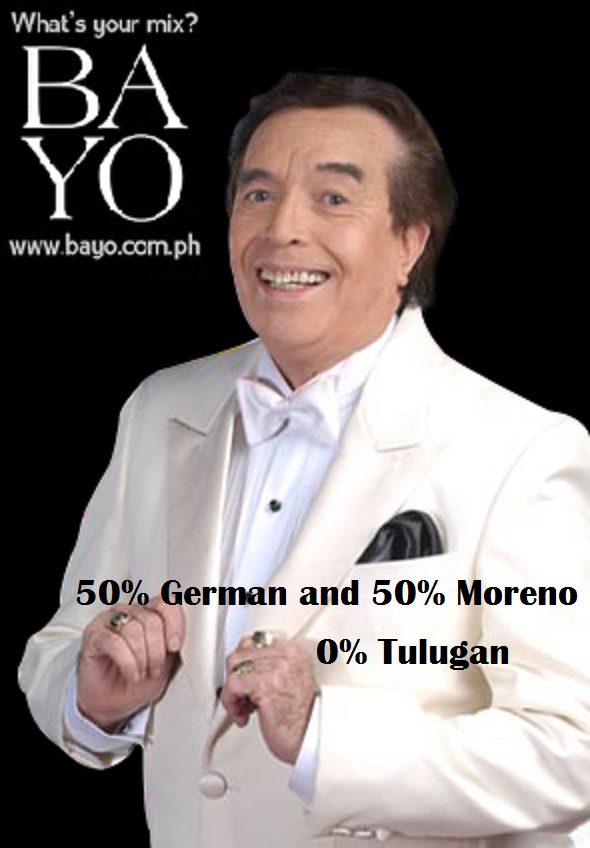
Numerous image macros were created to mock the ad, featuring Kris Aquino (99% Mouth, 1% Sense), German Moreno (50% German, 50% Moreno, 0% Tulugan), Bernardo Bernardo (50% Bernardo, 50% Bernardo), an explicit illustration of a manananggal (50% Filipino), as well as pop culture characters such as Captain Planet, Robocop, and Joffrey Baratheon.

Bayo2

Source: POC: Philippino Online Chronicles

Thursday, June 7, 2012

Next Poet Laureate is Multiracial


Next Poet Laureate is Multiracial

The Library of Congress is to announce Thursday that the next poet laureate is Natasha Trethewey, the Pulitzer Prize-winning author of three collections and a professor of creative writing at Emory University in Atlanta. Ms. Trethewey, 46, was born in Gulfport, Miss., and is the first Southerner to hold the post since Robert Penn Warren, the original laureate, and the first African-American since Rita Dove in 1993. 

“I’m still a little in disbelief,” Ms. Trethewey said on Monday. 

Unlike the recent laureates W. S. Merwin and her immediate predecessor, Philip Levine, both in their 80s when appointed, Ms. Trethewey, who will officially take up her duties in September, is still in midcareer and not well-known outside poetry circles. Her work combines free verse with more traditional forms like the sonnet and the villanelle to explore memory and the racial legacy of America. Her fourth collection, “Thrall,” is scheduled to appear in the fall. She is also the author of a 2010 nonfiction book, “Beyond Katrina: A Meditation on the Mississippi Gulf Coast.”
 
In a phone interview from her home in Decatur, Ga., where she lives with her husband, Brett Gadsden, a history professor at Emory, Ms. Trethewey explained that the Civil War has fascinated her since childhood, and that she eventually came to feel that she embodied some of its contradictions. “My birthday is April 26th, Confederate Memorial Day,” she said. “I was born 100 years to the day after that holiday was invented. I don’t think I could have escaped learning about the Civil War and what it represented.” 

As one of her poems explains, Ms. Trethewey is the product of a union that was still a crime in Mississippi when her parents married: her mother was black and her father was white. Years later, after her mother’s death, she came across her own birth certificate and saw that the line for the race of her mother says, “colored,” the race of her father, “Canadian.”
“That’s how language works — how we change and rewrite ourselves,” she said. 


Source: NY Times, Charles McGrath

Tuesday, June 5, 2012

Biracial Teen and Hate Crime


SPRINGFIELD, Ore. — A felony hate crime charge has been filed against a Eugene man accused along with three teenagers of shouting racial slurs from a pickup truck flying a Confederate flag and chasing a biracial teenager in a downtown Springfield parking lot.
The suspect, 22-year-old Matthew Robert Dean Booster, was arrested last week after the incident on Memorial Day, the Eugene Register-Guard reported Tuesday.

The felony intimidation charge was filed Monday, the district attorney's office said.

All four suspects are white.

Police said the youth reported that he was waiting on street corner for his mother about 8:30 p.m. when the yellow pickup drove by and circled the block, the flag flying from a pole behind the cab.

When the truck returned, police said, the people inside yelled slurs and threatened the teenager, who tried to walk away. The truck pursued him into a gravel parking lot, and the four got out and began running after him.

He was able to hide in a bush until his mother arrived and took him to the police station, police said.
"I can't imagine going through something like this, especially as a 15-year-old," Springfield police Capt. Rich Harrison said Monday.
He said police identified Booster's 1993 Ford pickup as the vehicle and arrested two boys, ages 16 and 17, on Thursday, and Booster and a 17-year-old girl on Saturday.

The youths were charged with a lesser count, second-degree intimidation, and released to their parents. They are to be prosecuted in juvenile court.Booster appeared in court Monday on the felony count but didn't enter a plea. He's due back in court next week. A call to his lawyer Tuesday was not returned immediately.

Mayor Christine Lundberg called it an "ugly and offensive crime."

"We will continue to make life difficult for people who commit crimes of hatred in Springfield," she said in a statement.
___
Information from: The Register-Guard, http://www.registerguard.com
Sources: AP and The Eugene Register-Guard

Wednesday, May 9, 2012

Poor Nicole Richie on Being Bi-Racial: "It's Work to Do My Hair"

Nicole Richie on Being Bi-Racial: "It's Work to Do My Hair"

Nicole Richie Nicole Richie Credit: Glamour
Nicole Richie is one of those lucky stars whose style comes off as completely effortless. But in her new interview with Glamour, the Fashion Star mentor admits that one part of her look doesn't come so easily.
"I'm mixed, and it's work to do my hair, so I learned how to do it well myself," the 30-year-old star, who sports a yellow Martin Grant top, Agnes B bikini and Mosley Tribes sunglasses in the pic above, tells the mag's June issue. "I have naturally curly hair, so 'natural' beach waves are not so natural for me. I like to braid my hair at night and then let it out the next day. And I also curl my hair with a flatiron."

"I actually think I'm the best hairstylist on the planet," she jokes. To achieve her voluminous curls in the pic above, Glamour.com says, "Richie's hairstylist, Andy Lecompte, wound her hair in figure eights around pins to get this fluff. Tease for volume, and flat-iron the ends. Prep with a soft-hold gel like Suave Professionals Captivating Curls Spray Gel ($3.50, drugstore.com)."

Read more: http://www.usmagazine.com/celebrity-beauty/news/nicole-richie-on-being-bi-racial-its-work-to-do-my-hair-201285#ixzz1uPrjXUOq

Tuesday, May 8, 2012

The TOP TEN Reasons to be a Multiracial Advocate

10. Just because we have a multiracial president and the census forms now have “check two or more,” discrimination is still blatant toward multiracial people. It’s the hate crime that is ignored. Don’t just complain; make a difference! No one else, no other groups are going to do this for us. 
9. The US Department of Education suggests but does not mandate that schools allow students and staff to check more than one race. They do not let schools know that it is OK to add “multiracial” to forms—we know it is and so do they. 
8. I heard a community leader refer to his son recently as a “half-breed.” I don’t think there is any excuse to call anyone a term that is less than respectful. 
7. I received an email recently about a school district in a major US city that is allowing parents enrolling their children in school as two or more races, but then FORCING them to specify which race is their “PRIMARY CHOICE.” 
6. Young children can’t speak for themselves about being forced to choose between their parents’ races. Maybe it’s your child or maybe you have multiracial grandchildren. They depend on us to speak for them. 
5. The multiracial community is still not being invited to the table in Washington for talks that include our needs. If we don’t advocate in force, we remain invisible. We will lose any gains we have made. 
4. We have been told that multiracial people are not “protected by any laws because they don’t exist legally.” Other minority populations have advocated for protection under local, state, and federal laws and they have won their rights. What’s WRONG with us?!

3. The federal government refuses to use respectful terminology for our population. They call multiracial people “People who check two or more boxes” or “A more than one race person.” It’s an outrage. Get mad. Speak up. 
2. Multiracial people are dying and only other multiracial people can save them. For those with diseases of the blood and some cancers, patients must get a bone marrow transplant. Bone marrow crosses racial and ethnic lines. In other words, the BEST chance at a compatible match is someone with the same race or ethnicity. If you only do one proactive, positive, selfless part of this movement, save a life. Register to be a donor.

And the number one reason to be a multiracial advocate…
1.     If the multiracial community stops advocating, the government will go back to the “check only one” rule. They are talking about it. Trust me on this.

Wednesday, May 2, 2012

What will YOU do?!


What will YOU do?!

Have you heard about Kraft’s new advertising campaign for its new MilkBites product? If not, let us explain. First, we know that some people don’t see the problem. They say that they are just commercials for candy bars and have no implications for the multiracial community or multiracial children. You might agree. We don’t. If you are an advocate for multiracial people and if you see this candy bar as a metaphor for a multiracial person, we urge you to sign the petition at:


So what’s the big deal? A woman named Michelle Parrinello-Carson viewed some of the Kraft commercials and was shocked and insulted at their use of their character named “Mel.” They say Mel has issues. Mel is a character who is clearly depicted as biracial and is conflicted over his identity. He is “part milk and part granola.” Subtle messages in the commercials show Mel’s preference to his “white” (milk) part over his “brown” (granola) side. Mel also says that “blonds are best.” Mel even asks his parents if they really thought it over when they made him. Mel is represented as having the “tragic mulatto syndrome.” Yes, a talking candy bar.

Michelle wrote the following (in part) to Kraft:
“I am appalled that a company (especially one of your size and influence) would stoop to racism and the perpetuation of racial tropes in a way that seems completely unconnected from the product or any of its attributes. Perhaps this campaign was created specifically to create controversy, thus getting more people to know about it, but whatever the (ill-formed) motivation, I am writing to let you know that I will not be purchasing any of your products until this campaign is removed and an apology is issued. This is an insult and a socially irresponsible message.”

In return, Kraft sent Michelle an insulting form letter, thanking her for visiting their website.

View some of the commercials for yourself at:: 

If you feel as we do that Kraft is sending the wrong message and that it is insulting to the multiracial community, please sign Michelle’s petition. You can also complain to Kraft at this page on their website (but don’t expect more than a form letter response):

Project RACE commends Michelle Parrinello-Carson for her actions and joins in her appeals against Kraft. She has seen the problem and shown how one person can make a difference by pointing out that yes, we get it—and we don’t like it—that a company like Kraft is using a talking candy bar can be a metaphor for a biracial person with identity issues. No matter how cute they make it, the message is a bad one.