"I wish my identity weren't so wrapped up with who I am."
Source: The New Yorker - 2012

Showing posts with label multiracial. Show all posts
Showing posts with label multiracial. Show all posts
Wednesday, June 27, 2012

Sunday, June 24, 2012
The Multiracial Advocacy Blog: What's in a NAME?
The Multiracial Advocacy Blog: What’s in a Name?
Today was Gay Pride Day in California, well at least in San Francisco where a Gay Pride Parade was held, as it is every year. I was listening to the radio after I read my Sunday San Francisco Chronicle and I was surprised at the two different take-away points each had from the same event.
The Chronicle gave me information. I learned that over 15,000 gay people were targeted during the Holocaust and made to wear pink triangles on their shirts. I had no idea. Many of them met the same fate as Jewish people during that terrible time. I learned that former San Francisco Mayor Willie Brown has worked for gay rights. The Chronicle coverage was unbiased, informational, educational, and positive.
The KGO radio show host tried to be unbiased by repeatedly referring to gay pride like black pride and, of course, multiracial pride. I’m not sure that’s helpful to anyone and my feelings were echoed by several callers.
I’m tired of people comparing the gay movement with the multiracial movement. The reason they are so often compared because both seek legitimacy and equality. They are two definitely different movements. But why are they so often compared?
I remember when I was at my son’s elementary school in the early 1990’s and was standing in the hallway waiting for school to get out for the day. His class happened to walk by and we waved at each other. A woman standing next to me said, “Is that your child?!” I said, “Yes,” and her reply was, “It must be so hard to be the mother of a son who likes other boys.” Huh?! Ohhhhhhhhh, I finally got it. She had confused “biracial” and “bisexual.” Oh boy.
But I keep hearing it and it makes me downright mad every time. I’m hardly homophobic, but I’m also not seeing the connection. Is it that both groups have been opposed? Are biracial and bisexual closer in language than in reality? Am I supposed to ask biracial kids if they are also bisexual? Of course not, and yet the comparison continues.
I am Jewish. The connection between being Jewish and the history of the Holocaust is obvious—in your face—obvious. But I had never heard the gay/Holocaust history before. I doubt many people have. They are intrinsically different, but still let’s never forget either one.
I also hear multicultural interchanged with multiracial. Nope. Culture and race are different things: multicultural is more about “how we do things around here” while multiracial is “the DNA I was born with.”
It’s all very different and should not be all that confusing if only we could all just get along.
Susan Graham
Wednesday, June 20, 2012
Multiracial Jews
Multiracial Jews Moving Beyond Isolation
Associate Editor
Today, her three children attend the Abraham Joshua Heschel School, and each is in a class with at least one other mixed-race Asian. “And there are other races as well,” she noted.
Meanwhile at Manhattan’s Central Synagogue, where Buchdahl is a member of the clergy, there are at least 20 families with Jews of color, not counting Sephardic or Mizrachi Jews.
“Things have changed quite a bit,” she said in an interview conducted by e-mail. (She was resting her vocal cords for an upcoming solo at the installation ceremony last weekend of Rabbi Rick Jacobs as the Union for Reform Judaism’s new president.)
Rabbi/Cantor Buchdahl’s observations are reflected in the comprehensive UJA-Federation of New York population study released this week. The first Jewish population study to ask about race, it finds that approximately 12 percent — or 87,000 — of New York Jewish households are “multiracial or nonwhite.”
This category includes households in which survey respondents were both Jewish and black, Hispanic, Asian or biracial, or in which white Jewish respondents reported that their household is bi- or multiracial. “As a group they are divided almost equally among four groups: Hispanic respondents, Black respondents, white respondents with biracial households, and biracial respondents, with small numbers of others (for example, Asian-American respondents),” the study reports.
In short, the category encompasses a wide range of profiles — among them interracial couples and their children, adult children of interracial couples, white couples with non-white adopted children and non-whites who were either born Jewish or converted to Judaism. And it is not clear how many families fit each profile.
“There are a lot of sub-categories that need to be teased out,” said Steven M. Cohen, the director of research for the study.
For decades, Sammy Davis Jr. was the only Jew of color who was a household name. Now a quick scan of headlines from the past few months reveals that the legendary black Muslim boxer Muhammad Ali attended the bar mitzvah of his Jewish grandson (the child of a white Jewish father and black Muslim mom), black Orthodox Jewish rapper Y-Love (who converted to Judaism) came out as gay and black Jewish hip-hop artist Drake (white Jewish mother, black gentile dad), a Jewish day school grad, released a controversial “bar mitzvah” video.
But there is no typical multiracial Jewish family: the category represents a mix of races and ethnicities, as well as a wide range of family and national backgrounds everywhere on the spectrum of Jewish observance.
“To call everyone ‘Jews of color’ is really a disservice because there’s so much variation,” said Diane Tobin, director of Be’chol Lashon, a San Francisco-based group that conducts research and offers various programs throughout the United States, including an overnight summer camp for multiracial Jewish children. “Between intermarriage, conversion and adoption, there’s so many different paths and ways people are identifying as being Jews.”
Noting that the 2010 U.S. Census found that the number of multiracial children in general had increased by over 50 percent since 2000, and that recent surveys show historically high rates of acceptance of interracial marriage, Tobin applauded the UJA-Federation study for asking about race, and said it’s important to learn more about this growing population.
What multiracial Jewish households share, say advocates, is a sense of isolation and a desire to connect with other Jews of color.
April Baskin, the president of the Jewish Multiracial Network, whose annual retreat last weekend at a Jewish retreat center in Pennsylvania attracted 100 people, said, “We have people who are strongly identified as atheists and others who are ultra-Orthodox. But we all share this need to begin to shift the consciousness of the Jewish community.”
Baskin, who is 28, was raised in a Reform congregation in Sacramento; she is the daughter of a white Jewish mother and an agnostic African American and American Indian father who, she recently learned, had some Jewish ancestors.
“Other than being a Jew of color, I had a pretty normative Jewish experience” growing up, said Baskin, noting that she was active in the Reform youth group NFTY as a teen and in Hillel as a college student at Tufts University.
It was in college that she first felt singled out for being multiracial. Like many other non-white Jews, she at times feels frustrated by always having to explain her background and answer questions from Jews who are curious why she looks different. “I moderated a panel at the retreat about what kind of questions do you get asked, and one guy on the panel said, ‘I just print out 30 copies of my bio and hand it to people” as soon as they start asking questions, Baskin said, laughing.
For her college thesis, Baskin conducted a national online survey of Jews of color. In response to an open-ended question asking, “‘Is there anything else you’d like to share?” almost every single person said, ‘I want to meet other Jews of color and/or hear their stories,’” Baskin recalled. “I realized there was a need to create a forum for that.”
With its retreats, an online community of almost 1,800 people and various other programs, the Jewish Multiracial Network is one such forum. Founded 15 years ago by a small group of white parents with non-white adoptive children, the volunteer-run network has become more diverse, with most of its board members now Jews of color or white Jews in interracial marriages, Baskin said.
San Francisco’s Be’chol Lashon — created in 2000 — offers another forum and resource, sponsoring research, organizing social programs and promoting awareness about global Jewish history and culture.
The New York chapter of Be’chol Lashon holds monthly discussion groups at the Jewish Board of Family and Children’s Services.
Be’chol Lashon grew out of the Institute for Jewish & Community Research’s studies on multiracial and non-white Jews, after discovering that participants gathered for focus groups “overwhelmingly wanted to get together again.”
“People felt a sense of isolation, they didn’t know other people like themselves,” said the organization’s director Tobin, who is white, but has an adopted African-American son.
One common denominator among non-white Jews, according to the UJA-Federation study, is relatively low rates of Jewish engagement.
The study reports that respondents in nonwhite households “tend to eschew any denominational affiliation,” and are far more likely to be intermarried (54 percent versus 18 percent for all-white Jewish households — not surprising, since many interracial couples are also interfaith). Significantly fewer join synagogues (27 percent versus 47 percent), very few have mostly Jewish friends (18 percent versus 57 percent — again, not surprising considering that many have non-Jewish family members) and their use of Jewish day schools is less than half that other Jewish households.
Cohen, the study’s co-author, said multiracial and non-white Jewish households have a “very similar profile to that of the intermarried, with possibly more geographic spread.”
One of Be’chol Lashon’s goals is to bridge that gap between Jews of color and the organized Jewish community — by increasing awareness in mainstream groups about non-white and multiracial Jews and the “global nature of the Jewish community,” and by encouraging mainstream groups to host Be’chol Lashon programs.
“All our events are now partnered with a mainstream Jewish organization; it’s part of our policy now, so people are coming into Jewish spaces,” Tobin said.
Central Synagogue’s Rabbi/Cantor Buchdahl remains one of only a handful of non-white and multiracial Jewish clergy members.
But she said she’s raising fewer eyebrows than she once did.
“Ten years ago, even if I led an entire service in Hebrew, people would still challenge me afterwards with ‘Are you Jewish?’” she recalled. “It was such a disconnect for them, they couldn’t reconcile it. But these days, people might ask questions, but they don’t challenge me in the same way.”
Source: Published on The Jewish Week (http://m.thejewishweek.com)
Multiracial Exercise?
Once again, we wonder how many of these white and black girls are actually multiracial. Excluded from studies one more time.
Benefits of Exercise Show Racial Differences
While exercise may be beneficial in combating obesity in adolescents, a new study suggests physical activity may be less successful in preventing obesity in black girls than in their white counterparts.
The study, published in the Archives of Pediatrics and Adolescent Medicine, examines the levels of physical activity and obesity of more than 1,100 girls at ages 12 and 14. The racial split was 538 black girls and 610 white ones.
Measurements of obesity include Centers for Disease Control and Prevention definitions of obesity, the International Obesity Task Force body mass index cut points, and the sums of skin-fold thickness. The study also compares participants' physical activity and food intake, reports the Los Angeles Times.
Based on the girls' level of physical activity, they were divided into lower and upper halves within their respective racial categories. Twelve-year-old white girls in the upper half were 85 percent less likely to become obese at age 14 than their white peers in the bottom half. However, black girls in the top half were only 15 percent less likely to be obese two years later than black girls in the lower half, reports the Times.
The study concludes by suggesting that obesity preventions aimed at black girls may need to be adapted to account for their decreased sensitivity to the effects of physical activity.
Authors James White of Cardiff University and Russell Jago of the University of Bristol write that their results "suggest that prompting adolescent girls to be active may be important to prevent obesity but that using different approaches ... may be necessary to prevent obesity in black girls."
Source: Education Week
Tuesday, June 19, 2012
Hispanic Girls face Barriers
Hispanic Girls Face Special Barriers on Road to College
Hispanic women are more likely than Hispanic men to complete high school and college, but they still trail white and African-American women
Dallas-After 15-year-old Valerie Sanchez spent a day of her spring break in Fort Worth touring the well-manicured grounds of Texas Christian University and listening to an inspirational talk from members of a Latina sorority, she felt sure of her future.
But like many young Latinas, she faces a host of challenges in the coming years, as she works to graduate from high school, go on to community college, and then enroll in a four-year institution.
Sanchez moved from Mexico when she was 9 years old and enrolled in the 156,000-student Dallas Independent School District. After taking bilingual classes taught in Spanish and English, she found the transition to all-English classes in middle school difficult.
Consequently, Sanchez was held back in the 8th grade last year at Edison Middle Learning Center here in Dallas. She now attends tutoring sessions after school in addition to programs provided by Girls Inc. that focus on career planning and pregnancy prevention.
The plight of Latino young men often dominates the discussion of graduation rates. But young Latinas also face cultural, economic, and educational barriers to finishing high school and entering and completing college.
"There's the assumption that girls are doing fine," says Lara Kaufmann, a senior counsel at the National Women's Law Center, in Washington. "It's true that within ethnic groups girls are doing better than boys. But they're not doing well."
Falling Behind
While Hispanic women are more likely to graduate from high school and college when compared with Hispanic men, some statistics suggest they trail behind African-American and white women on some such measures.Postsecondary Engagement Lags for Latinas
To delve into why such gaps persist, the National Women's Law Center collaborated with the Mexican American Legal Defense and Educational Fund on a 2009 study on educational outcomes for Latinas.
While the middle and high school girls interviewed in the report said they wanted to graduate from college, they also said they didn't expect to achieve that goal. The report also cited challenges for them in reaching educational goals, including such difficulties as immigration status, poverty, discrimination, low self-esteem, higher rates of depression and attempted suicide, gender stereotypes, and limited English proficiency.
A cultural emphasis on loyalty to family also can play a role. Latinas may be expected to take on additional duties as caregivers, such as helping to watch younger children or aid elderly family members. They may be expected to live with their parents until they are married, making it difficult to leave home to go away to college.
Ties That Bind
Celina Cardenas mentors Hispanic girls in the 37,000-student Richardson Independent School District in the Dallas suburbs. Cardenas, a district community-relations coordinator, is Mexican-American and feels she can relate to their experiences.Family loyalty can cause Hispanic girls to choose less-competitive colleges than they are qualified to attend so they can keep living with their parents. They may also not be well informed about financial-aid opportunities to attend more expensive schools.
University of Texas at San Antonio education professor Anne-Marie Nuñez says that when girls live at home while in college, they may have a hard time focusing on their studies because of family obligations.
"They may be juggling multiple responsibilities that pull them away from being able to focus on their studies," Nuñez says. "Other family members may not understand the energy they need to focus on their studies."
In Texas, a nonprofit online magazine written by girls, called Latinitas, aims to empower young women. The organization also provides workshops, mentoring, and college tours. On the website, Saray Argumedo, 23, shares her own experiences about the tension with her family when she studied at the University of Texas at El Paso.
"All I can do is ask for forgiveness when my mom questions why I spend all my time outside of the house studying, working, and getting involved in my community," she writes. "I thought that they would be proud of me, but why are they so angry?"
Teenage Motherhood
Young Latinas also are more likely than most young women in the United States to have their own children as teenagers. According to the National Campaign to Prevent Teen and Unplanned Pregnancy, in Washington, about 52 percent of Latinas become pregnant before age 20, nearly twice the national average. In Dallas, the nonprofit group Alley's House helps mothers complete their General Educational Development, or GED, studies and build their confidence.Consuelo says her daughter is her motivation to finish school. "I'm trying to be the best I can for her," she says.
Despite the challenges, says Nuñez, the education professor, "the truth is Latino families have as high aspirations as other groups. Sometimes, they just don't know how to translate those aspirations to reality."
Source: Education Week
Monday, June 18, 2012
Black, White, and Multiracial Ancestors of Michelle Obama
‘American Tapestry’ hangs on Michelle Obama’s roots
Thanks to the in-depth research of New York Times reporter Rachel Swarns, missing branches have been restored to the first lady's elusive family tree. Now her book further explores a multiracial bloodline that flows throughout the South during Reconstruction and beyond and more prominently through Chicago's South Side during the swinging jazz era of the 1920s.
American Tapestry is not only the remarkable story of the first lady's family, providing insight into some of the wonderful traits that have been passed down to her, but also a microcosm of this country's story as well. It's unfortunate that not enough documentation survives to answer so many more questions, but the anecdotal tales shed light on a history that's been long suppressed in the first lady's family and within many other African-American families. Namely, the pain and shame associated with slavery and mixed races.
The story of the first lady's genealogy, though sometimes hard to follow, is riveting as Swarns pieces together the family tree, branch by branch and generation by generation. It certainly helped having Obama's long-lost cousin Jewell Barclay consent to a DNA test in Cleveland in the search for the truth. It was news to Barclay that so many of her relatives settled in Chicago and that she was related to the first lady. But then, one of the side benefits of this research is how so many of Obama's relatives reconnected.
It turns out that Melvinia's oldest son, Dolphus Shields, moved to Birmingham, Ala., where he became a prosperous Baptist deacon, homeowner and businessman. Purnell Shields, his grandson, relocated to Chicago with his mother in the integrated South Side, but later became embittered about the Jim Crow South and the segregated North.
On the other side of the family, the Great Migration north to Chicago contains its share of hardships: Obama's great-grandmother Phoebe Moten struggled with middle-class aspirations during the Depression with her minister husband, James Johnson, when racial strife soared. In a way, the real-life saga of struggle, survival, triumph and tragedy serves as an uplifting companion to Alex Haley's Roots and Alice Walker's The Color Purple.
Eventually, chance encounters in South Chicago produce Obama's grandparents. At which point, Swarn's narrative retraces the family branches produced in the Old South and post-slavery. "A lot of the time these stories get buried, because sometimes the pain of them makes it hard to want to remember," Obama recounts.
Thus, in the end, American Tapestry is about the crucial ties that bind the first lady.
--
Bill Desowitz is the author of James Bond Unmasked.
Source: USA Today
Wednesday, June 13, 2012
Multiracial Chidren and Poverty Data
Recession Impact: Minorities' Net Worth Falls By a Third
People of color lose about same share of wealth as whites, but they have much less to lose, Fed numbers show.
June 13, 2012 | 10:46 a.m.
During the Great Recession, working hard had little effect. Median household net worth for Hispanic households was $29,700 in 2007, dropping to $20,400 in 2010.
Racial and ethnic minorities were hit hard by the Great Recession, losing about a third of their net worth between 2007 and 2010, according to Federal Reserve Board numbers analyzing the years 2007 to 2010.
The nation's median household income fell to 1992 levels, losing 39 percent, largely because of the decrease in home values, especially among the middle class, USA Today reports. While fewer minorities owned homes, their median value dropped significantly during a time when people of all income levels encountered hardship on the job and property front.
When considering share of net worth lost, households headed by nonwhites or Hispanics fared about as bad as their white counterparts: white households' median net worth dropped 27.2 percent; nonwhite or Hispanic households lost 31.31 percent.
But nonwhite and Hispanic households had much less to lose.
In 2007, the median household net worth for a nonwhite or Hispanic households was $29,700. It dropped to $20,400 in 2010. By comparison, white households were worth $179,400 in 2007. In 2010, their value was $130,600.
As the nation becomes more diverse, the economic well-being of all Americans has and will become increasingly tied to the financial well-being of racial and ethnic minorities.
In 2010, whites made up 63.7 percent of the nation’s population, down from 69.1 percent in 2000, according to census numbers. The Census Bureau suggests that the white population will fall just under 51 percent by 2040 and that whites will be a plurality by 2050.
Historically, racial and ethnic minorities have earned less than their white peers. In 2010, the median income for non-Hispanic white households was $54,620; it was $32,068 for black households, and $37,759 for Hispanics. The median income for Asians was $64,308.
In 2010, Afraican-American households, on average, earned 59 percent of what their white counterparts did, according to the census. That rate has not changed significantly since 1972, when the census first tracked median income by race and ethnicity.
The gap has closed slightly between whites and Hispanics. In 1972, the median income for Hispanics was 59 percent that of whites. In 2010, they earned 69 percent. The median household income for Asians was nearly 20 percent more than for whites.
The income disparities along racial and ethnic lines are indicative of broader socioeconomic divisions within American society.
“Low socioeconomic status and its correlates, such as lower education, poverty, and poor health, ultimately affect our society as a whole,” according to the American Psychological Society.
In 2010, 38.2 percent of African-American children lived in poverty. Among Hispanic children, 32.3 percent did. And 22.7 percent of children who identified as being two or more races were considered poor by federal standards.
White and Asian children had poverty rates below the U.S. average of 21.6 percent. Children who live in poverty, especially young children, are more likely than their peers to have cognitive and behavioral difficulties, to complete fewer years of education, and--as they grow up--to experience more years of unemployment, according to the census.
Source: The Next America, June 13, 2012
The nation's median household income fell to 1992 levels, losing 39 percent, largely because of the decrease in home values, especially among the middle class, USA Today reports. While fewer minorities owned homes, their median value dropped significantly during a time when people of all income levels encountered hardship on the job and property front.
When considering share of net worth lost, households headed by nonwhites or Hispanics fared about as bad as their white counterparts: white households' median net worth dropped 27.2 percent; nonwhite or Hispanic households lost 31.31 percent.
But nonwhite and Hispanic households had much less to lose.
In 2007, the median household net worth for a nonwhite or Hispanic households was $29,700. It dropped to $20,400 in 2010. By comparison, white households were worth $179,400 in 2007. In 2010, their value was $130,600.
As the nation becomes more diverse, the economic well-being of all Americans has and will become increasingly tied to the financial well-being of racial and ethnic minorities.
In 2010, whites made up 63.7 percent of the nation’s population, down from 69.1 percent in 2000, according to census numbers. The Census Bureau suggests that the white population will fall just under 51 percent by 2040 and that whites will be a plurality by 2050.
Historically, racial and ethnic minorities have earned less than their white peers. In 2010, the median income for non-Hispanic white households was $54,620; it was $32,068 for black households, and $37,759 for Hispanics. The median income for Asians was $64,308.
In 2010, Afraican-American households, on average, earned 59 percent of what their white counterparts did, according to the census. That rate has not changed significantly since 1972, when the census first tracked median income by race and ethnicity.
The gap has closed slightly between whites and Hispanics. In 1972, the median income for Hispanics was 59 percent that of whites. In 2010, they earned 69 percent. The median household income for Asians was nearly 20 percent more than for whites.
The income disparities along racial and ethnic lines are indicative of broader socioeconomic divisions within American society.
“Low socioeconomic status and its correlates, such as lower education, poverty, and poor health, ultimately affect our society as a whole,” according to the American Psychological Society.
In 2010, 38.2 percent of African-American children lived in poverty. Among Hispanic children, 32.3 percent did. And 22.7 percent of children who identified as being two or more races were considered poor by federal standards.
White and Asian children had poverty rates below the U.S. average of 21.6 percent. Children who live in poverty, especially young children, are more likely than their peers to have cognitive and behavioral difficulties, to complete fewer years of education, and--as they grow up--to experience more years of unemployment, according to the census.
Source: The Next America, June 13, 2012
Friday, June 8, 2012
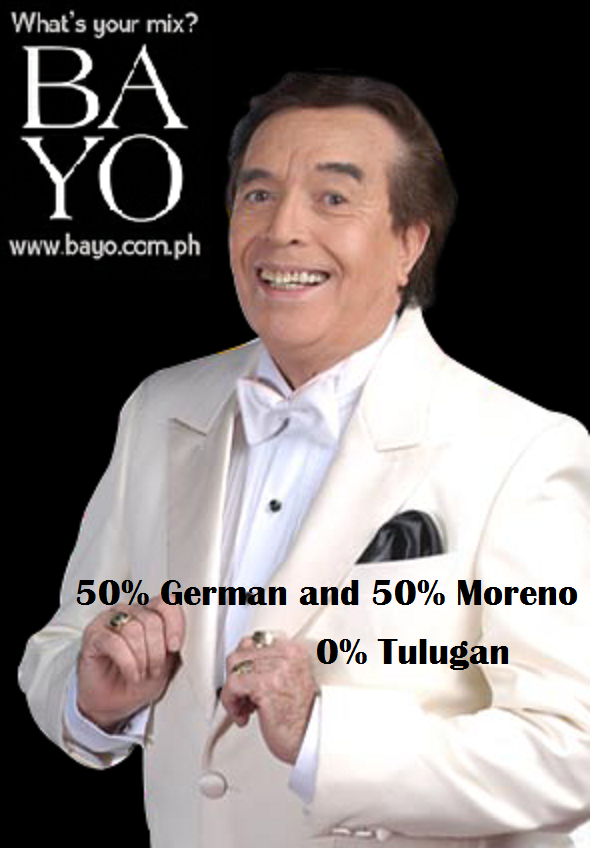
The Multiracial Advocacy Blog-Update on Bayo Fashion Campaign
The Multiracial Advocacy Blog-Update on Bayo Fashion Campaign
Comment from Susan Graham: On behalf of the multiracial community, I am so pleased to see that our advocates spoke out against this fashion advertising campaign and made a difference! GREAT JOB!
Bayo drops controversial mixed-race campaign
Women’s fashion brand Bayo will pull its new “What’s Your Mix?” advertising campaign after drawing flak for appearing to promote the superiority of mixed-race models, the company announced yesterday.
ABS-CBN News reports that Bayo vice president for product research and development Lyn Agustin apologized for the campaign after the backlash from ads that featured mixed-race models and a manifesto that claimed that the “mixing and matching of different nationalities with Filipino blood is almost a sure formula for someone beautiful and world class.”

“We are very sorry that the campaign unintentionally offended people,” Agustin said. “We are going to prepare a better and more sensitive campaign, more sensitive to the big issues.”
The advertising campaign drew indignation from numerous internet outlets, with the majority of the discussion appearing on Facebook and on blogs. Rappler notes that the campaign seemed to imply that one must be mixed-race in order to be “ideal”.
The breakdown of the percentage of the models’ races (60% African, 40% Filipino; 80% Chinese, 20% Filipino; 30% Indian, 70% Filipino) drew disdain from bloggers, with Marcelle Fabie questioning the mathematics involved.
Numerous image macros were created to mock the ad, featuring Kris Aquino (99% Mouth, 1% Sense), German Moreno (50% German, 50% Moreno, 0% Tulugan), Bernardo Bernardo (50% Bernardo, 50% Bernardo), an explicit illustration of a manananggal (50% Filipino), as well as pop culture characters such as Captain Planet, Robocop, and Joffrey Baratheon.
Bayo's official statement is as follows:

Source: POC: Philippino Online Chronicles
The Multiracial Advocacy Blog-Hate Crime Update
Activists stage rally against hate crimes in Springfield
SPRINGFIELD — Community activists have rallied against hate crimes after authorities accused four young white people of threatening a biracial teenager on Memorial Day.
Meanwhile, police arrested a fifth person and investigated spray-painted swastikas and racist messages in a neighborhood where one suspect lives, the Eugene Register-Guard reported Thursday.
At the gathering of about 50 people outside City Hall on Wednesday afternoon, Springfield City Councilor Sheri Moore told the rally participants she has an adopted son who is black, and her family has experienced discrimination. But, she said, only a minority of local residents have racist attitudes.
“Springfield, as you can see, is a community of caring people,” Moore said. “We outnumber the others, and will work together to eliminate hate.”
That came hours after police announced they had booked Brandon James Ricker, 19, on charges of attempted intimidation, hindering prosecution and evidence tampering.
Police said they interviewed him while trying to track down the other suspects and told him to keep quiet. Instead, police said, he told 22-year-old Eugene resident Matthew Booster to flee and then deleted a series of text messages that he and Booster had exchanged.
Prosecutors later decided not to press the charges as long as Ricker cooperates as a witness in the case, said Police Capt. Rich Harrison.
Police said Booster was driving a yellow pickup truck flying a Confederate flag on Memorial Day in downtown Springfield. Booster and three teens inside yelled racial slurs and got out of the truck to chase the 15-year-old, who had been walking and escaped by hiding in bushes until his mother arrived, police said.
All four were charged with intimidation. Prosecutors made Booster’s charge a felony. The other three are to be prosecuted in juvenile court on misdemeanor charges.
Harrison said investigators are still trying to identify the people responsible for spray-painting swastikas and racist messages throughout a neighborhood in which one of the suspects resides. The graffiti was reported Sunday and Monday at several locations.
After the rally, participants asked downtown business owners to post “Hate Free Zone” leaflets.
Marion Malcolm, who coordinates a Community Alliance of Lane County program called Springfield Alliance for Equality and Respect, commended police and city officials for their response.
“They have stayed on the case,” Malcolm said.
Published Daily in Bend Oregon by Western Communications, Inc. © 2011
By The Associated Press
Published: June 08. 2012 4:00AM PST
Thursday, June 7, 2012
Next Poet Laureate is Multiracial
Next Poet Laureate is Multiracial
The Library of Congress is to announce Thursday that the next poet laureate is Natasha Trethewey, the Pulitzer Prize-winning author of three collections and a professor of creative writing at Emory University in Atlanta. Ms. Trethewey, 46, was born in Gulfport, Miss., and is the first Southerner to hold the post since Robert Penn Warren, the original laureate, and the first African-American since Rita Dove in 1993.
“I’m still a little in disbelief,” Ms. Trethewey said on Monday.
Unlike the recent laureates W. S. Merwin and her immediate predecessor, Philip Levine, both in their 80s when appointed, Ms. Trethewey, who will officially take up her duties in September, is still in midcareer and not well-known outside poetry circles. Her work combines free verse with more traditional forms like the sonnet and the villanelle to explore memory and the racial legacy of America. Her fourth collection, “Thrall,” is scheduled to appear in the fall. She is also the author of a 2010 nonfiction book, “Beyond Katrina: A Meditation on the Mississippi Gulf Coast.”
In a phone interview from her home in Decatur, Ga., where she lives with her husband, Brett Gadsden, a history professor at Emory, Ms. Trethewey explained that the Civil War has fascinated her since childhood, and that she eventually came to feel that she embodied some of its contradictions. “My birthday is April 26th, Confederate Memorial Day,” she said. “I was born 100 years to the day after that holiday was invented. I don’t think I could have escaped learning about the Civil War and what it represented.”
As one of her poems explains, Ms. Trethewey is the product of a union that was still a crime in Mississippi when her parents married: her mother was black and her father was white. Years later, after her mother’s death, she came across her own birth certificate and saw that the line for the race of her mother says, “colored,” the race of her father, “Canadian.”
“That’s how language works — how we change and rewrite ourselves,” she said.
Source: NY Times, Charles McGrath
Wednesday, June 6, 2012
Multiracial Fashionista Flap
Multiracial Fashionista Flap
MANILA, Philippines –Several Filipino Internet users were not pleased with the newest campaign of women’s fashion brand Bayo, which directly promotes mixed-race models.
Bayo’s “What’s Your Mix?” campaign, launched early this month, features Filipino-Australian actress Jasmine Curtis-Smith with the text “50% Australian and 50% Filipino.”
Other models were given labels such as “80% Chinese and 20% Filipino,” “40% British and 60% Filipino,” and 30% Indian and 70% Filipino.”
“Call it biased, but the mixing and matching of different nationalities with Filipino blood is almost a sure formula for someone beautiful and world-class. We always have the fighting chance to make it in the world arena of almost all aspects,” Bayo said in the ad which, according to independent social news website Mashable, has been taken down.
Although Bayo stressed that the new ad aims to highlight a person’s uniqueness, several Filipinos turned to blogs and social networking sites to say that the “What’s Your Mix?” campaign was “demeaning,” while some said it was “poorly executed.”
“Bayo had a good idea. They just presented it in a terrible way. Sad,” Klave Answorth said.
What do you think? Leave a comment!
Source: ABS-CBN News.com
MANILA, Philippines –Several Filipino Internet users were not pleased with the newest campaign of women’s fashion brand Bayo, which directly promotes mixed-race models.
Bayo’s “What’s Your Mix?” campaign, launched early this month, features Filipino-Australian actress Jasmine Curtis-Smith with the text “50% Australian and 50% Filipino.”
Other models were given labels such as “80% Chinese and 20% Filipino,” “40% British and 60% Filipino,” and 30% Indian and 70% Filipino.”
“Call it biased, but the mixing and matching of different nationalities with Filipino blood is almost a sure formula for someone beautiful and world-class. We always have the fighting chance to make it in the world arena of almost all aspects,” Bayo said in the ad which, according to independent social news website Mashable, has been taken down.
Although Bayo stressed that the new ad aims to highlight a person’s uniqueness, several Filipinos turned to blogs and social networking sites to say that the “What’s Your Mix?” campaign was “demeaning,” while some said it was “poorly executed.”
“Bayo had a good idea. They just presented it in a terrible way. Sad,” Klave Answorth said.
What do you think? Leave a comment!
Source: ABS-CBN News.com
Tuesday, June 5, 2012
Biracial Teen and Hate Crime
SPRINGFIELD, Ore. — A felony hate crime charge has been filed against a Eugene man accused along with three teenagers of shouting racial slurs from a pickup truck flying a Confederate flag and chasing a biracial teenager in a downtown Springfield parking lot.
The suspect, 22-year-old Matthew Robert Dean Booster, was arrested last week after the incident on Memorial Day, the Eugene Register-Guard reported Tuesday.
The felony intimidation charge was filed Monday, the district attorney's office said.
All four suspects are white.
Police said the youth reported that he was waiting on street corner for his mother about 8:30 p.m. when the yellow pickup drove by and circled the block, the flag flying from a pole behind the cab.
When the truck returned, police said, the people inside yelled slurs and threatened the teenager, who tried to walk away. The truck pursued him into a gravel parking lot, and the four got out and began running after him.
He was able to hide in a bush until his mother arrived and took him to the police station, police said.
"I can't imagine going through something like this, especially as a 15-year-old," Springfield police Capt. Rich Harrison said Monday.He said police identified Booster's 1993 Ford pickup as the vehicle and arrested two boys, ages 16 and 17, on Thursday, and Booster and a 17-year-old girl on Saturday.
The youths were charged with a lesser count, second-degree intimidation, and released to their parents. They are to be prosecuted in juvenile court.Booster appeared in court Monday on the felony count but didn't enter a plea. He's due back in court next week. A call to his lawyer Tuesday was not returned immediately.
Mayor Christine Lundberg called it an "ugly and offensive crime."
"We will continue to make life difficult for people who commit crimes of hatred in Springfield," she said in a statement.
___
Information from: The Register-Guard, http://www.registerguard.com
Sources: AP and The Eugene Register-Guard
Monday, June 4, 2012
The M Word and Multiracial Advocacy
The M Word and Multiracial Advocacy
Many changes happen all around us all through our lifetimes, so why doesn’t the government think sticks and stones will break our bones, but words will never hurt us? Multiracial, mixed, multiracial, half-breed, multiracial, multiethnic, mixie, multicultural, other, multiracial, multiracial, multiracial! So many words to choose from, but which is the right one?
The worlds of psychiatry and psychology are not ones I know much about, but I am going to try to explain why words are always important. Try to stick with me.
President Barack Obama signed “Rosa’s Law,” which mandates that the term “mental retardation” be replaced by “intellectual disability” in federal education, health, and labor laws.
Now the American Psychiatric Association is considering making the same change. The International Classification of Diseases, which is published by the World Health Organization, has already made the change.
So what does this have to do with the multiracial population? Plenty. We’re talking about nine million people and what they are called. Does this sound familiar? The government calls the multiracial community “people who check more than one race,” “the combination population” and more silly terms. Some people refer to themselves or other multiracial people as “mixies, half-breeds, mutts, etc.”
This is what Rosa’s 14-year-old brother said in state testimony about the term “mental retardation” and why it needed to be changed:
“What you call people is how you treat them. What you call my sister is how you will treat her. If you believe she’s ‘retarded’, it invites taunting, stigma. It invites bullying and it also invites the slammed doors of being treated with respect and dignity.”
What Rosa advocated for was a more positive change in wording. It has to do with what society labels a person. It has to do with respectful terminology. This seems to be an ongoing debate because of many other factors in the psychiatric community, but they are headed in the right direction. The term “multiracial” is also a respectful term. Advocate for “multiracial.” You and our kids deserve that same respect.
Susan Graham
Project RACE
Saturday, June 2, 2012
Multiracial, Race, Ethnicity and Drugs: Major Health News
Comment from Susan Graham: This is very big news that shows black adults with diabetes benefit specifically from a drug. However, it also leaves the question of what about the multiracial population?AACE: The First Study to Show That an Ethnic Group Can Gain Benefits from a DPP-4 Compound |
| The dipeptidyl peptidase-4 (DPP-4) inhibitor linagliptin (Tradjenta, Boehringer Ingelheim and Lilly) is associated with significant improvements in glycated hemoglobin (HbA1c) in black patients with type 2 diabetes.... |
| "We found that this drug had clinically significant and clinically relevant reductions in all measures of hyperglycemia that we looked at," said lead researcher James Thrasher, MD, from the Arkansas Diabetes and Endocrinology Center in Little Rock. The study was sponsored by the drug's manufacturers. The multicenter, randomized, placebo-controlled, double-blind trial -- the first study of a DPP-4 inhibitor specifically conducted in black adults -- showed that linagliptin 5 mg once daily reduced HbA1c by 0.88% over 24 weeks, compared with 0.24% with placebo (P = .0002). Black adults tend to suffer from diabetes at a higher rate than white non-Hispanic adults, and "they have higher rates of complications," said Dr. Thrasher during a press conference. "In most clinical trials, the majority of participants are white non-Hispanic patients. We wanted to do this first-of-a-kind study of a DPP-4 inhibitor to look at a minority group, specifically blacks," he said. "This is...something relatively new for us to do, to look at ethnic groups specifically with a clinical trial and a drug." The study involved 226 patients who were randomized to linagliptin 5 mg (n = 106) or placebo (n = 120) once daily for 24 weeks. Slightly more than half (54%) of the patients were men, mean age was 54 years, and mean body mass index was 32.7 kg/m². Almost three quarters (72%) of the patients had hypertension, and most patients were on metformin or a sulfonylurea, which they continued throughout the study period. The remaining 12% were treatment-naïve. HbA1c levels were similar in the linagliptin and placebo groups at baseline (8.63% vs 8.70%), and were measured every 6 weeks during the study.Patients who had a baseline HbA1c measurement and at least 1 post-baseline measurement (n = 200) were included in the efficacy analysis; those who received at least 1 dose of the study drug were included in the safety analysis.In terms of efficacy, HbA1c levels were significantly different at 6 weeks, and remained so for the rest of the study. Patients in the linagliptin group were significantly more likely than those in the placebo group to see an HbA1c reduction of 0.5% by week 24 (55.3% vs 28.3%; P < .0001). In addition, significantly more patients in the linagliptin group than in the placebo group achieved an HbA1c level below 7.0% (28.0% vs 8.7%; P = .001), a target recommended by the American Diabetes Association. The rates of adverse events were similar in the 2 groups, were mostly mild or moderate, and were considered to be unrelated to the study drug. The most common adverse events were hyperglycemia (2.8% with linagliptin and 9.2% with placebo) and nasopharyngitis (3.8% with linagliptin and 5.0% with placebo). Researcher-defined hypoglycemia occurred in 3 patients in the linagliptin group and in 1 patient in the placebo group; none of the events required external assistance. "In this high-risk group, this is a drug that's efficacious, has a similar side-effect profile to placebo, and is a treatment option for patients who have inadequate control of their type 2 diabetes," concluded Dr. Thrasher. Presented at the American Association of Clinical Endocrinologist (AACE) May 24, 2012. Abstract 206. |




Wednesday, May 30, 2012
The Multiracial Advocate and The High Cost of the Census
The Multiracial Advocate and The High Cost of the Census
The United States Census Bureau is so huge, so filled with layers of bureaucracy, that it’s always surprising that they can manage to get a census done every ten years. Lots of passing the buck ends up costing taxpayers—that’s us—big bucks for all that number-crunching. But did you know that a decennial census is not all the bureau does? They have a census every year. Honest.
The American Community Survey (ACS) is sent to about three million households every year. The government spends about $70 per person to fill it out and get this: It’s mandatory to fill it out. It’s not voluntary. They will track you down and they can fine you for not being very cooperative. By the way, it’s 26 pages long. You can do the math.
Yes, they ask for the race(s) and ethnicity of everyone in the household, even though they ask that on each census. Maybe they want to be sure that we’re sure of what we are. They also ask things like do you have plumbing facilities? What’s your occupation? How much money do you make? What is your primary language? They used to ask how many slaves you had, but they finally dropped that question. They have added questions about your health insurance coverage.
The House recently voted to eliminate the survey completely. That could mean lots of job losses at the Census Bureau! The Senate still has to vote, and most Washington folks are betting that it will go to a conference committee and they just might keep it, but make it voluntary instead of mandatory. That could actually end up costing more, but would be less invasive to our personal privacy.
A lot is at stake with the American Community Survey; journalists use the data to make those cute little pie charts about us, homebuilder’s need the data to know where to build, retailers depend on the ACS to decide where they should locate new stores, and that’s just a few of a long list of stakeholders.
Is it worth keeping? I don’t personally know anyone who has ever received one, so I can’t judge just how much time it really takes and how invasive people feel it is, but I know it’s something I hope I never get in the mail. I’m too busy keeping track of all of this.
Multiracial people arestakeholders in the ACS just like we are in the Census, but no one has asked us how we feel about it. So Project RACE is not taking an official stand on this one, but we remember how long it took to get the ability to check more than one race on the Census. The Census Bureau kicked and screamed about it all the way. If you’re someone who thinks they accommodated the multiracial community out of the goodness of their hearts or because it made sense, you’re living on some other planet. It took a lot of hard work by many advocates for multiracial people to back them into a political corner so they finally had to do the right thing. We’ll be watching what happens with this. If you feel so inclined, write to your senators and let them know how you feel.
Saturday, May 26, 2012
Time to watch a VIDEO!
Watch our Project RACE Teens at their bone marrow donor drive on May 20th!
http://www.youtube.com/watch?v=sIMz6Apmnn4
http://www.youtube.com/watch?v=sIMz6Apmnn4
Friday, May 25, 2012
Hmmmmm or Huh?
The Future of Whiteness
I concluded my column this weekend on Elizabeth Warren’s supposed Indian ancestry by noting that America’s emerging post-white future, in which “almost everyone will be 1/8 something-or-other,” will make certain forms of contemporary affirmative action and diversity promotion look increasingly ridiculous. I see that Matt Yglesias, himself 1/4 Cuban, has pivoted off his self-professed status as “just another white dude” to make the case that America will never actually become post-white:
This is the irony of our situation: The same kind of affirmative-action programs that will look increasingly ridiculous in a majority-minority America are also what promise to usher that majority-minority America into existence in the first place. Maybe it will be otherwise, and the babies currently being identified by the Census as hyphenated Americans will drop the hyphens as they grow up, apply to schools, enter the workforce and so on. But even Yglesias himself acknowledges that when he filled out his 2010 census form, he identified as “of Hispanic, Latino or Spanish origin,” despite feeling like “a bit of a fraud.” Why he did so is his own business, but if affirmative action as we know it endures for another quarter century, I expect that many of the minority Americans currently being born will do exactly the same thing. They’ll feel a bit bogus identifying as anything other than generic Americans when they grow up, but they’ll do it anyway – because that’s what the system expects from them, and what all of its incentives are designed to reward.
Source: Ross Douthat, The New York Times
It’s conceivable that 40 years from now nobody will care about race at all. But if they do still care, it will still be the case that—by definition—whiteness is the racial definition of the sociocultural majority. If the only way for that to happen is to recruit large swathes of the Hispanic and fractionally Asian population into whiteness, then surely it will happen. Indeed, while the Census Bureau has always been very clear that some people are white, others black, and yet others Native American or Indian, the federal government has frequently changed its mind about the rest. The first time an additional option showed up was in Census 1870’s addition of a “Chinese” race. By 1890 you were also allowed to be “Japanese,” and “mulatto,” “quadroon,” and “octoroon” categories were implemented for the fractionally black. These mixed-race categories vanished in 1900, but mulatto returned in 1910, and in 1920 “Hindu,” “Korean,” and “Filipino” became races. Mulatto vanished in 1930, and “Mexican” became a race, though people of Mexican ancestry had been living in large parts of the United States since those parts of the country actually belonged to Mexico. In 1940, Mexicans were granted white status—a measure backed up by a 1943 Texas law passed in part as an act of wartime solidarity, in appreciation of Latin American support for the anti-Nazi cause.Well, except for the fact that the incentives have shifted for minorities themselves. To be “granted” white status today means something very different (and something less obviously desirable) than it did in 1943. It means gaining a majoritarian identity, yes, but it also means giving up various privileges in hiring, admissions and so on — privileges that are defended by networks of activists and institutions that would themselves diminish or disappear if a category like “Hispanic” went the way of “mulatto” and “octoroon.” And the power of these incentives and interest groups means that even if the social reality changes in ways that make our current racial and ethnic classifications increasingly out-of-date (not that “Hispanic” is a particularly coherent category to begin with), it’s easy to imagine the bureaucratic practice simply grinding on, in government and the private sector alike — inviting people who might otherwise identify as “just another white guy” (or white woman, in Elizabeth Warren’s case) to identify as minorities instead, in order to claim the benefits to which their increasingly-distant ethnic patrimony entitles them (not to mention making their institutions look better on “federally-mandated diversity statistics”).
Hindu and Korean vanished in 1950, but Korean returned in 1970 along with an “Other” category. In 1980, “Vietnamese,” “Asian Indian,” and “Guamanian” became races, and the government started classifying people as Hispanic or not-Hispanic over and above their racial designation. Only in 1990 did the Census hit upon the idea of lumping a bunch of people together into a catchall “Asian” race. In 2000 they gave us the “two or more races” category.
The point of this long-winded recitation is simply that with the important exception of the black/white dichotomy, America has never operated with a stable conception of race. The factoid that 50 percent of our latest baby crop is other than non-Hispanic white is true only relative to the 2000 census scheme. There’s no reason to believe that this particular categorization will continue as bureaucratic practice or social reality.
This is the irony of our situation: The same kind of affirmative-action programs that will look increasingly ridiculous in a majority-minority America are also what promise to usher that majority-minority America into existence in the first place. Maybe it will be otherwise, and the babies currently being identified by the Census as hyphenated Americans will drop the hyphens as they grow up, apply to schools, enter the workforce and so on. But even Yglesias himself acknowledges that when he filled out his 2010 census form, he identified as “of Hispanic, Latino or Spanish origin,” despite feeling like “a bit of a fraud.” Why he did so is his own business, but if affirmative action as we know it endures for another quarter century, I expect that many of the minority Americans currently being born will do exactly the same thing. They’ll feel a bit bogus identifying as anything other than generic Americans when they grow up, but they’ll do it anyway – because that’s what the system expects from them, and what all of its incentives are designed to reward.
Source: Ross Douthat, The New York Times
Multiracial DNA Sought
DNA study seeks origin of Appalachia's Melungeons
NASHVILLE, Tenn. – For years, varied and sometimes wild claims have been made about the origins of a group of dark-skinned Appalachian residents once known derisively as the Melungeons. Some speculated they were descended from Portuguese explorers, or perhaps from Turkish slaves or Gypsies.
Now a new DNA study in the Journal of Genetic Genealogy attempts to separate truth from oral tradition and wishful thinking. The study found the truth to be somewhat less exotic: Genetic evidence shows that the families historically called Melungeons are the offspring of sub-Saharan African men and white women of northern or central European origin.
And that report, which was published in April in the peer-reviewed journal, doesn't sit comfortably with some people who claim Melungeon ancestry.
"There were a whole lot of people upset by this study," lead researcher Roberta Estes said. "They just knew they were Portuguese, or Native American."
Beginning in the early 1800s, or possibly before, the term Melungeon (meh-LUN'-jun) was applied as a slur to a group of about 40 families along the Tennessee-Virginia border. But it has since become a catch-all phrase for a number of groups of mysterious mixed-race ancestry.
In recent decades, interest in the origin of the Melungeons has risen dramatically with advances both in DNA research and in the advent of Internet resources that allow individuals to trace their ancestry without digging through dusty archives.
They conclude that as laws were put in place to penalize the mixing of races, the various family groups could only intermarry with each other, even migrating together from Virginia through the Carolinas before settling primarily in the mountains of East Tennessee.
Claims of Portuguese ancestry likely were a ruse they used in order to remain free and retain other privileges that came with being considered white, according to the study's authors.
The study quotes from an 1874 court case in Tennessee in which a Melungeon woman's inheritance was challenged. If Martha Simmerman were found to have African blood, she would lose the inheritance.
Her attorney, Lewis Shepherd, argued successfully that the Simmerman's family was descended from ancient Phoenicians who eventually migrated to Portugal and then to North America.
Writing about his argument in a memoir published years later, Shepherd stated, "Our Southern high-bred people will never tolerate on equal terms any person who is even remotely tainted with negro blood, but they do not make the same objection to other brown or dark-skinned people, like the Spanish, the Cubans, the Italians, etc."
In another lawsuit in 1855, Jacob Perkins, who is described as "an East Tennessean of a Melungeon family," sued a man who had accused him of having "negro blood."
In a note to his attorney, Perkins wrote why he felt the accusation was damaging. Writing in the era of slavery ahead of the Civil War, Perkins noted the racial discrimination of the age: "1st the words imply that we are liable to be indicted (equals) liable to be whipped (equals) liable to be fined ... "
Later generations came to believe some of the tales their ancestors wove out of necessity.
Jack Goins, who has researched Melungeon history for about 40 years and was the driving force behind the DNA study, said his distant relatives were listed as Portuguese on an 1880 census. Yet he was taken aback when he first had his DNA tested around 2000. Swabs taken from his cheeks collected the genetic material from saliva or skin cells and the sample was sent to a laboratory for identification.
"It surprised me so much when mine came up African that I had it done again," he said. "I had to have a second opinion. But it came back the same way. I had three done. They were all the same."
In order to conduct the larger DNA study, Goins and his fellow researchers — who are genealogists but not academics — had to define who was a Melungeon.
In recent years, it has become a catchall term for people of mixed-race ancestry and has been applied to about 200 communities in the eastern U.S. — from New York to Louisiana.
Among them were the Montauks, the Mantinecocks, Van Guilders, the Clappers, the Shinnecocks and others in New York. Pennsylvania had the Pools; North Carolina the Lumbees, Waccamaws and Haliwas and South Carolina the Redbones, Buckheads, Yellowhammers, Creels and others. In Louisiana, which somewhat resembled a Latin American nation with its racial mixing, there were Creoles of the Cane River region and the Redbones of western Louisiana, among others.
The latest DNA study limited participants to those whose families were called Melungeon in the historical records of the 1800s and early 1900s in and around Tennessee's Hawkins and Hancock Counties, on the Virginia border some 200 miles northeast of Nashville.
The study does not rule out the possibility of other races or ethnicities forming part of the Melungeon heritage, but none were detected among the 69 male lines and 8 female lines that were tested. Also, the study did not look for later racial mixing that might have occurred, for instance with Native Americans.
Goins estimates there must be several thousand descendants of the historical Melungeons alive today, but the study only examined unbroken male and female lines.
The origin of the word Melungeon is unknown, but there is no doubt it was considered a slur by white residents in Appalachia who suspected the families of being mixed race.
"It's sometimes embarrassing to see the lengths your ancestors went to hide their African heritage, but look at the consequences" said Wayne Winkler, past president of the Melungeon Heritage Association. "They suffered anyway because of the suspicion."
The DNA study is ongoing as researchers continue to locate additional Melungeon descendants.
Source: Associated Press
Associated Press Writer Cain Burdeau contributed to this story from New Orleans, La.
Wednesday, May 23, 2012
Multiracial is an Important Word
Why Multiracial is an Important Word
Now that the minorities are becoming the majorities in the United States, the academicians and Washington bureaucrats can finally believe what we’ve been telling them all these years: multiracial people are becoming people we know. Some of them are in our families. Even our President is multiracial; how about that!
But some of those same people also want to take us back, way back to a time when people were not in a position to put a respectable name to what they were.
Back in the 1990s, advocates for multiracial people went to Washington. We were told we would never get a category if we didn’t know what to call it. You see, all kinds of terms were being tossed around: multiracial, biracial, interracial, mixed, half-breed, mixed-race, mulatto, and others; literally, “other.” No, we did not go to Washington just to be classified as “other.”
Project RACE was a growing organization by that time and we polled the membership. What terminology did they want? The answer was overwhelmingly “Multiracial.” Biracial was a close runner-up, but did not seem as all-encompassing as multiracial. Our members spoke and we listened. We went to Washington and told them what our majority wanted. When they said it was too ambiguous, we suggested a good compromise, an “Umbrella” category of Multiracial with the top five or ten most utilized combinations, very similar to how the Asian or Hispanic groups look. No, they didn’t want “multiracial” at all. It would become “the M word.”
If we go even further back in time, we can see how one community went from colored to Negro to black to African American. In fact, there was so much of a negative community uproar when the US Census Bureau put “Negro” on the 2010 census forms that we may not see it again.
In the mid-1990s, some of the Hapas—Asian and some other race—tried to talk some of the multiracial groups into using “Hapa” for everyone of more than one race, which obviously did not work. Some of the other groups, weary of it all by then, succumbed to the Census Bureau and NAACP’s “better judgment” of just check two or more boxes.
I admit to some despair at that time. I think we have seen proper terminology work for other groups, including the one advising us to just choose two or more. What harm is there in calling a group what it wants? Well, more than one group that had adopted “multiethnic,” even though race and ethnicity are two different things, another that wanted “interracial” and no one could agree. As far as I know, Project RACE was the only group that polled its membership for their opinion. Even better, we never gave in to other groups, demographers, politicians, or people who work for the government.
The term “multiracial” is a completely respectable term that defines someone of more than one race. It should be embraced by the multiracial community, but that isn’t happening—again.
One of the things we set out to do was to make the term “Multiracial” accepted. So what if that wasn’t what the federal government wanted? When we talk to the media, we use the correct terminology and it seems that they have listened. We advocate for the terminology of “Multiracial” being used on school forms, one reason was that teachers asked for it so that they could be consistent in their classrooms with their multiracial students.
One thing I have noticed is whenever the media refers to the background of our President, they use the respectful term “Multiracial.” No one calls him a “mixie.”
However, “mixies” abound. Personally, I would be happy never to hear that term again. It’s a terrible self-fulfilling prophecy, it’s not nearly as cute as the females who say it think it is—I’ve never heard a male call himself a mixie—and it’s not respectful, it’s derogatory. What is wrong with these mostly female 20 somethings who refer to themselves as “mixies”? It would have been just as bad had the black community referred to itself as “colored peeps.” It’s just not right. I have been told that some of the “mixies” are just trying to get attention and publicity and feel anything goes. But it doesn’t. Not in the long run. A derogatory term is still derogatory no matter how you say it. If we laugh at ourselves, others will be happy to laugh at us, too.
Don’t even get me started on multiracial people who tend to smile in a slightly uneasy way and say, “I’m just a mutt.”
What we call people is important. What we call ourselves or our children or grandchildren is important!
Why is this community trying to sabotage itself?!
Whether it’s called “mixie” on a radio show or “Critical Mixed Studies” by academics, it’s still wrong. I admit that I always felt the term “mixed” leant itself to things like “Mixed Nuts’ and “Mixed up.” I don’t even want to count the media stories over the years that said mixed kids were mixed up. One day I sat down and contemplated what really turned me off to the term “mixed.” I realized that the opposite of “mixed” is “pure.” I don’t want to be part of a culture that separates people by mixed and pure. It reminds me too much of Hitler and the “superior” white race, and I certainly don’t want to go there.
Yes, we advocate for the correct terminology of “Multiracial.” I recently heard a US Census top level executive refer to multiracial people as “People of more than one category.” Another new one is “people in combination,” which brings to mind ordering a combo meal at a fast food restaurant. One journalist thinks “people of color” is the answer to everything when all it does is separate whites from everyone else and so people would rekindle the days when the terminology was “colored people.” Is that really what you want? Can’t we show a cohesive acceptance of a word that describes us?
I am compelled by the membership of Project RACE to defend what our national membership wants—the term “Multiracial.” It means someone who is of more than one race. It’s a respectful, accurate, preferred term, it’s better than any other terminology to date, and it’s critical to let those in Washington, and in our own backyards, our schools, our hospitals, etc. know that we are cohesive, aware, politically astute, and advocates for multiracial wording on forms and in common usage.
Monday, May 21, 2012
54 More Multiracial Donors!
What a great success for our Project RACE Teens, under the direction of Kendall Baldwin!! They held a Bone Marrow Donor Drive yesterday with Be the Match in New Jersey and signed up 54 new people in the bone marrow registry. They worked very, very hard, had a lot of last minutes changes to deal with and came through it all. They are saving lives. Congratulations on a great donor drive!
Subscribe to:
Posts (Atom)