Get Paid To Promote, Get Paid To Popup, Get Paid Display Banner
Showing posts with label multiracial advocacy. Show all posts

Thursday, June 28, 2012

Multiracial Advocacy Response

Response from the Multiracial Advocacy

United States Census Bureau Director Groves blogged yesterday about "big data" changes for the Census Bureau and how it will make it cheaper, faster, and potentially better for users to get statistical information. Here is my response, which now appears on the bureau blog:

One Response to And Now, for Something a Little Different . . .

Susan Graham says:
It doesn’t matter if you call it “big data” or “little data.” It’s not getting to the stakeholders. I am the CEO of a stakeholders’ group and I have been trying unsuccessfully for weeks to get data. I have contacted the person responsible for the data numerous times. Director Groves stated, “Finally, it allows us to more nimbly meet the needs of our stakeholders for timely, relevant and reliable data.” I would certainly like to see how that works because it’s not working currently.

Friday, June 8, 2012

The Multiracial Advocacy Blog-Update on Bayo Fashion Campaign

 The Multiracial Advocacy Blog-Update on Bayo Fashion Campaign

Comment from Susan Graham: On behalf of the multiracial community, I am so pleased to see that our advocates spoke out against this fashion advertising campaign and made a difference! GREAT JOB!

 Bayo drops controversial mixed-race campaign


Women’s fashion brand Bayo will pull its new “What’s Your Mix?” advertising campaign after drawing flak for appearing to promote the superiority of mixed-race models, the company announced yesterday.

ABS-CBN News reports that Bayo vice president for product research and development Lyn Agustin apologized for the campaign after the backlash from ads that featured mixed-race models and a manifesto that claimed that the “mixing and matching of different nationalities with Filipino blood is almost a sure formula for someone beautiful and world class.”
Bayo
“We are very sorry that the campaign unintentionally offended people,” Agustin said. “We are going to prepare a better and more sensitive campaign, more sensitive to the big issues.”
The advertising campaign drew indignation from numerous internet outlets, with the majority of the discussion appearing on Facebook and on blogs. Rappler notes that the campaign seemed to imply that one must be mixed-race in order to be “ideal”.

The breakdown of the percentage of the models’ races (60% African, 40% Filipino; 80% Chinese, 20% Filipino; 30% Indian, 70% Filipino) drew disdain from bloggers, with Marcelle Fabie questioning the mathematics involved.

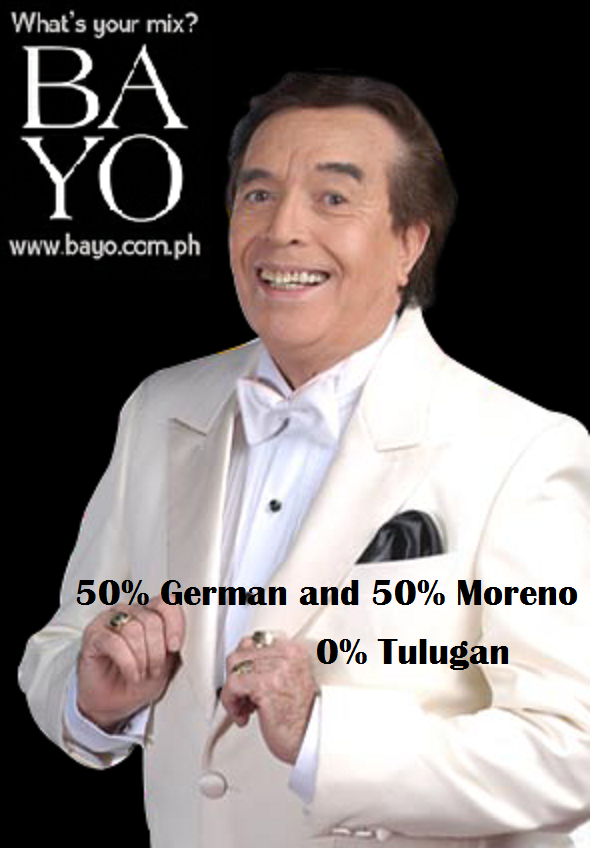
Numerous image macros were created to mock the ad, featuring Kris Aquino (99% Mouth, 1% Sense), German Moreno (50% German, 50% Moreno, 0% Tulugan), Bernardo Bernardo (50% Bernardo, 50% Bernardo), an explicit illustration of a manananggal (50% Filipino), as well as pop culture characters such as Captain Planet, Robocop, and Joffrey Baratheon.

Bayo2

Source: POC: Philippino Online Chronicles

Monday, June 4, 2012

The M Word and Multiracial Advocacy


The M Word and Multiracial Advocacy

Many changes happen all around us all through our lifetimes, so why doesn’t the government think sticks and stones will break our bones, but words will never hurt us? Multiracial, mixed, multiracial, half-breed, multiracial, multiethnic, mixie, multicultural, other, multiracial, multiracial, multiracial! So many words to choose from, but which is the right one?

The worlds of psychiatry and psychology are not ones I know much about, but I am going to try to explain why words are always important. Try to stick with me.

President Barack Obama signed “Rosa’s Law,” which mandates that the term “mental retardation” be replaced by “intellectual disability” in federal education, health, and labor laws.

Now the American Psychiatric Association is considering making the same change. The International Classification of Diseases, which is published by the World Health Organization, has already made the change.

So what does this have to do with the multiracial population? Plenty. We’re talking about nine million people and what they are called. Does this sound familiar? The government calls the multiracial community “people who check more than one race,” “the combination population” and more silly terms. Some people refer to themselves or other multiracial people as “mixies, half-breeds, mutts, etc.”

This is what Rosa’s 14-year-old brother said in state testimony about the term “mental retardation” and why it needed to be changed:

“What you call people is how you treat them. What you call my sister is how you will treat her. If you believe she’s ‘retarded’, it invites taunting, stigma. It invites bullying and it also invites the slammed doors of being treated with respect and dignity.”

What Rosa advocated for was a more positive change in wording. It has to do with what society labels a person. It has to do with respectful terminology. This seems to be an ongoing debate because of many other factors in the psychiatric community, but they are headed in the right direction. The term “multiracial” is also a respectful term. Advocate for “multiracial.” You and our kids deserve that same respect.

Susan Graham
Project RACE